Time leaves its mark on every whisky cask.
From the day new-make spirit is filled into oak, the whisky inside begins to change. Its colour deepens, its flavour develops, and its character takes shape. But something else happens too, quietly and continuously: a small amount of the whisky simply disappears.
That loss has a name that has been used across the whisky industry for centuries: the Angel’s Share. For anyone interested in whisky, and particularly in cask ownership, it is one of the most important processes to understand.
What is the Angel’s Share?
The Angel’s Share is the portion of whisky that evaporates from the cask during maturation.
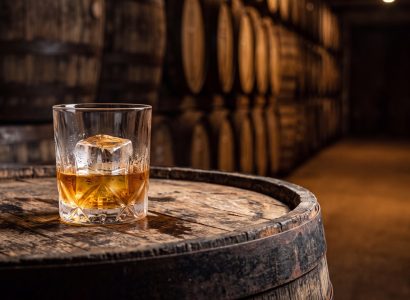
Oak is not a sealed container. It is porous, which allows the spirit to breathe as it ages. As it does, a small amount of liquid passes through the wood and escapes into the air of the warehouse. Over a single year the loss may seem modest, but across ten, twenty or thirty years it adds up.
In Scotland, the loss is often cited at around 2% of the cask’s volume each year, although the real figure varies from cask to cask and warehouse to warehouse. The name reflects the romance of the process: what is lost is said to go to the angels.
The cask is constantly interacting with its environment
No two casks lose whisky at exactly the same rate.
Several factors influence how quickly evaporation happens and how the spirit develops along the way:
Temperature: warmer conditions generally speed up evaporation and the interaction between spirit and wood.
Humidity: the moisture in the air affects whether more alcohol or more water is lost, which in turn influences the spirit’s strength over time.
Warehouse conditions: traditional low, earth-floored dunnage warehouses and modern racked warehouses can produce different maturation environments, and a cask’s position within a warehouse can matter too.
Cask type and size: smaller casks have more wood in contact with the spirit, which can increase both evaporation and the influence of the oak.
This interaction is not simply a loss. The same exchange between spirit, wood and air is what helps the whisky develop its flavour, character and complexity. Evaporation and maturation are, in many ways, two sides of the same process.
Time changes more than the taste
As a cask matures, two measurable things gradually change alongside its flavour.
Remaining volume. Year by year, the amount of whisky in the cask reduces. A cask that has matured for several decades may hold noticeably less spirit than when it was first filled, which means fewer bottles if it is eventually bottled.
Alcohol strength. In Scotland’s cool, damp climate, alcohol tends to evaporate more readily than water, so a cask’s strength usually falls over time. This matters because Scotch whisky must be bottled at a minimum of 40% ABV. A cask left too long may drop towards that threshold, limiting how it can be used or sold.
These changes are part of why older casks can be scarcer. They are also a reminder that age is not a guarantee of anything on its own.
Why the Angel’s Share matters
For collectors and investors, the Angel’s Share is part of what makes every mature cask unique. It also means that two casks of the same age, from the same distillery, can be in very different positions.
When assessing a maturing cask, a few questions are worth asking:
Regauge: When was the cask last measured, and what volume and strength did it record?
Strength: How far is the current ABV from the 40% minimum, and how quickly is it falling?
Cask type: What wood and previous contents was it filled into, and how is that shaping the spirit?
Storage: Where is the cask held, and under what warehouse conditions?
Condition and quality: Is the spirit developing well, and has it been sampled recently?
Market demand: Is there genuine buyer interest for this distillery and age?
Age can support desirability, but condition, provenance, quality and market demand all matter too. Understanding how evaporation has affected a cask is an important part of assessing its long-term potential.
The Fine Worth perspective
At Fine Worth, we see the Angel’s Share as a reminder that a whisky cask is a living asset. It is not static. Its volume, strength and character are changing every year it remains in the wood, and those changes need to be understood rather than assumed.
That is why regular review matters as much as careful selection. Knowing a cask’s age is only the beginning; understanding how it has matured, how much remains and how the market is likely to view it in future is what informs good decisions. Our approach is built around helping clients follow that journey, from sourcing and provenance through to bonded storage, ongoing monitoring and eventual exit planning.
Time is what gives mature whisky its depth, but it also asks something of the owner. For anyone considering cask whisky as part of a wider alternative-asset strategy, the principle is simple: understand the cask, follow how it changes and know when it is ready to move on.
Request your complimentary Whisky Investment Guide
Fine Worth provides access to professionally sourced whisky casks, supported by bonded storage, market expertise and long-term portfolio guidance.
Request your complimentary Whisky Investment Guide to learn how cask maturation works and what to consider before acquiring a cask.
Whisky and fine wine values can rise or fall. Past market performance, scarcity or historical valuations are not indicative of future returns, and investment outcomes are not guaranteed.